In 2025, customer projects reinforced a clear lesson: heavy machinery electrification moves forward when the powertrain is designed as one integrated, serviceable system.
Building on nearly two decades of electrification experience, Hevtec productized its accumulated system knowledge as the e-Kit. The result is a clearer and more repeatable offering built around the requirements of each machine, supported by integration-ready solutions for charging and high-voltage distribution.
Originally published in December 2025. Product status updated in August 2026.
In 2025, this meant supporting OEMs and partners across the full electrification path:
Customer projects repeatedly exposed the same integration needs: charging interfaces, high-voltage distribution, protection, service access, software responsibilities and commissioning. Our 2025 product work focused on turning these recurring needs into integration-ready solutions for electric NRMM.
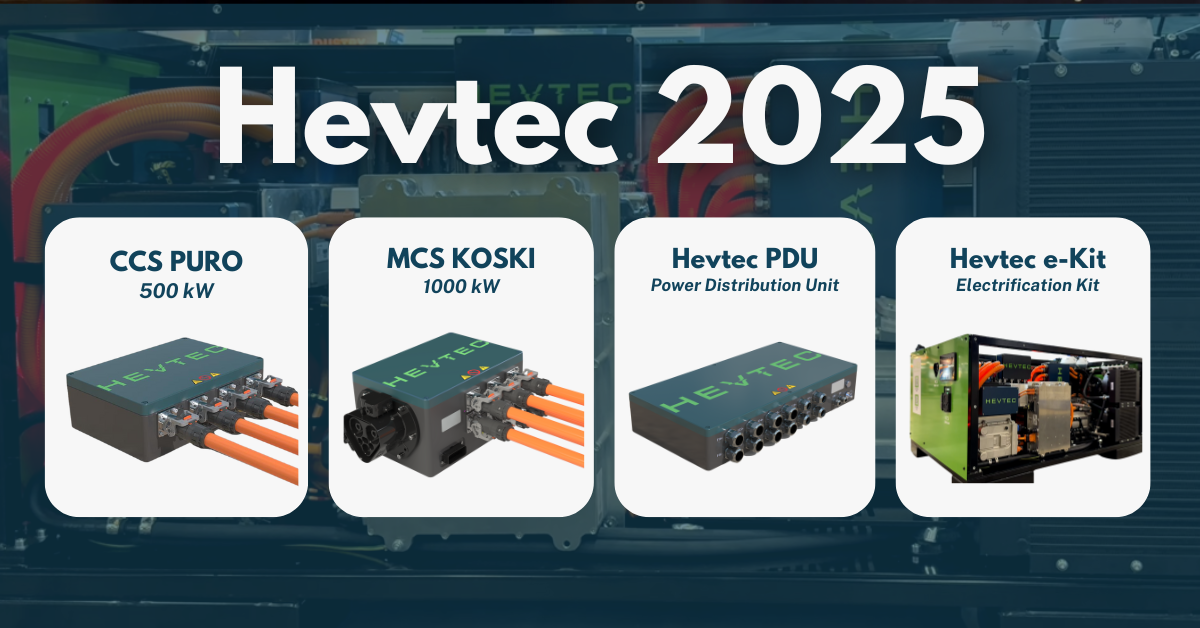
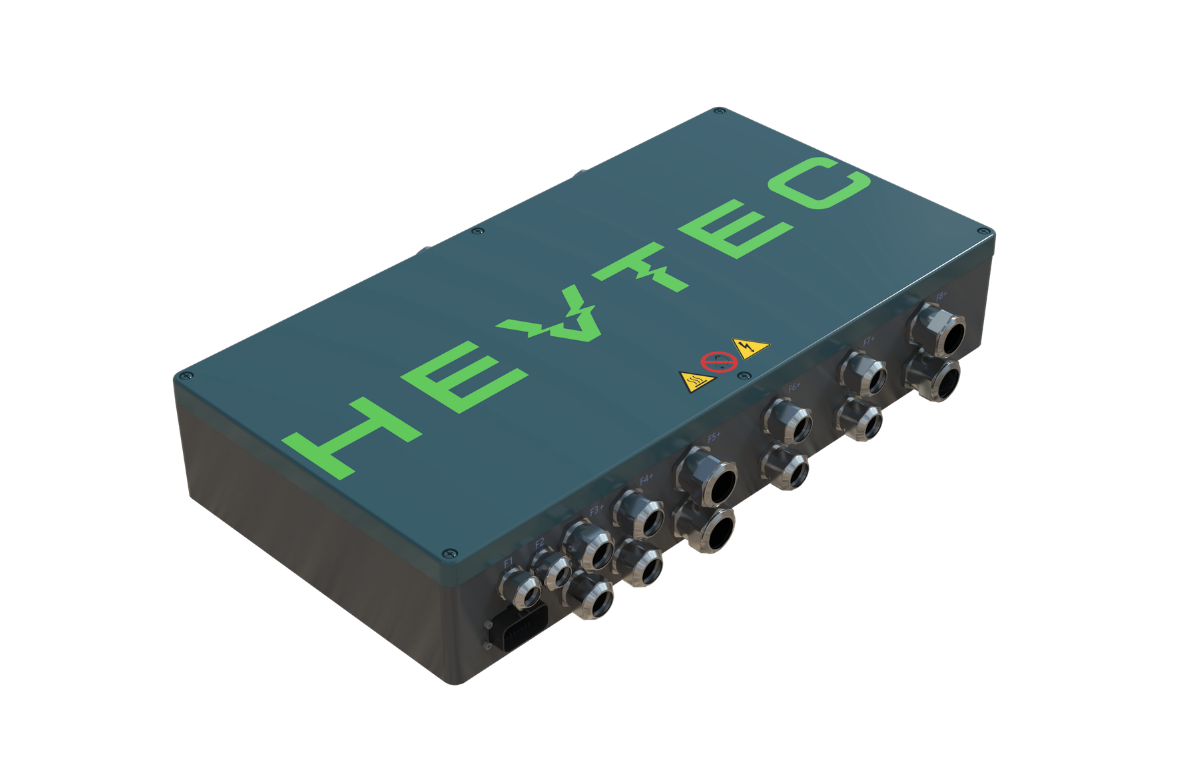
Power Distribution UnitRUNKO PDUSize S / M / LCentralizes high-voltage distribution, protection and service access.
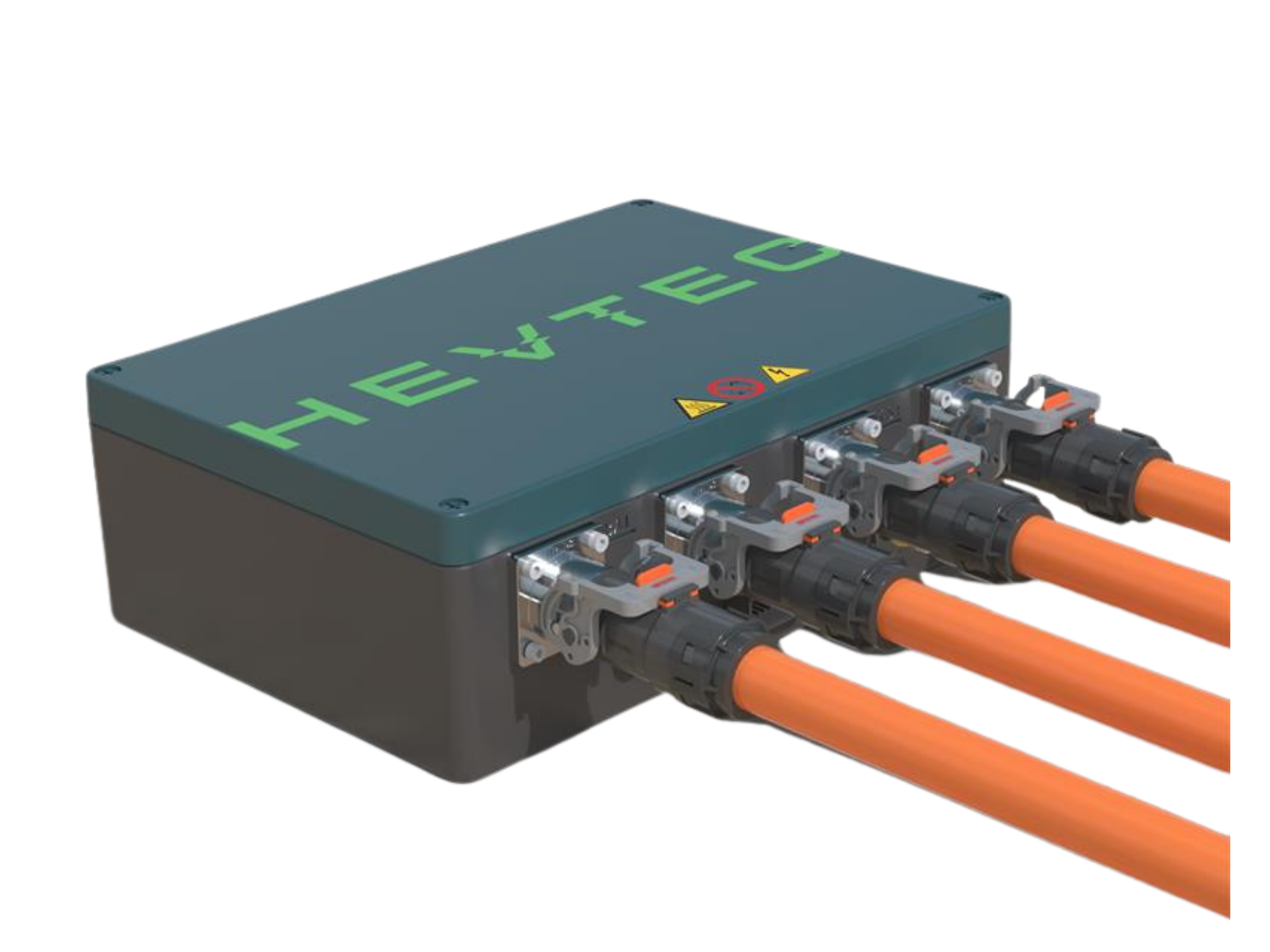
On-board CCSPURO CCS700 kWProvides an integration-ready CCS charging interface for electric NRMM.
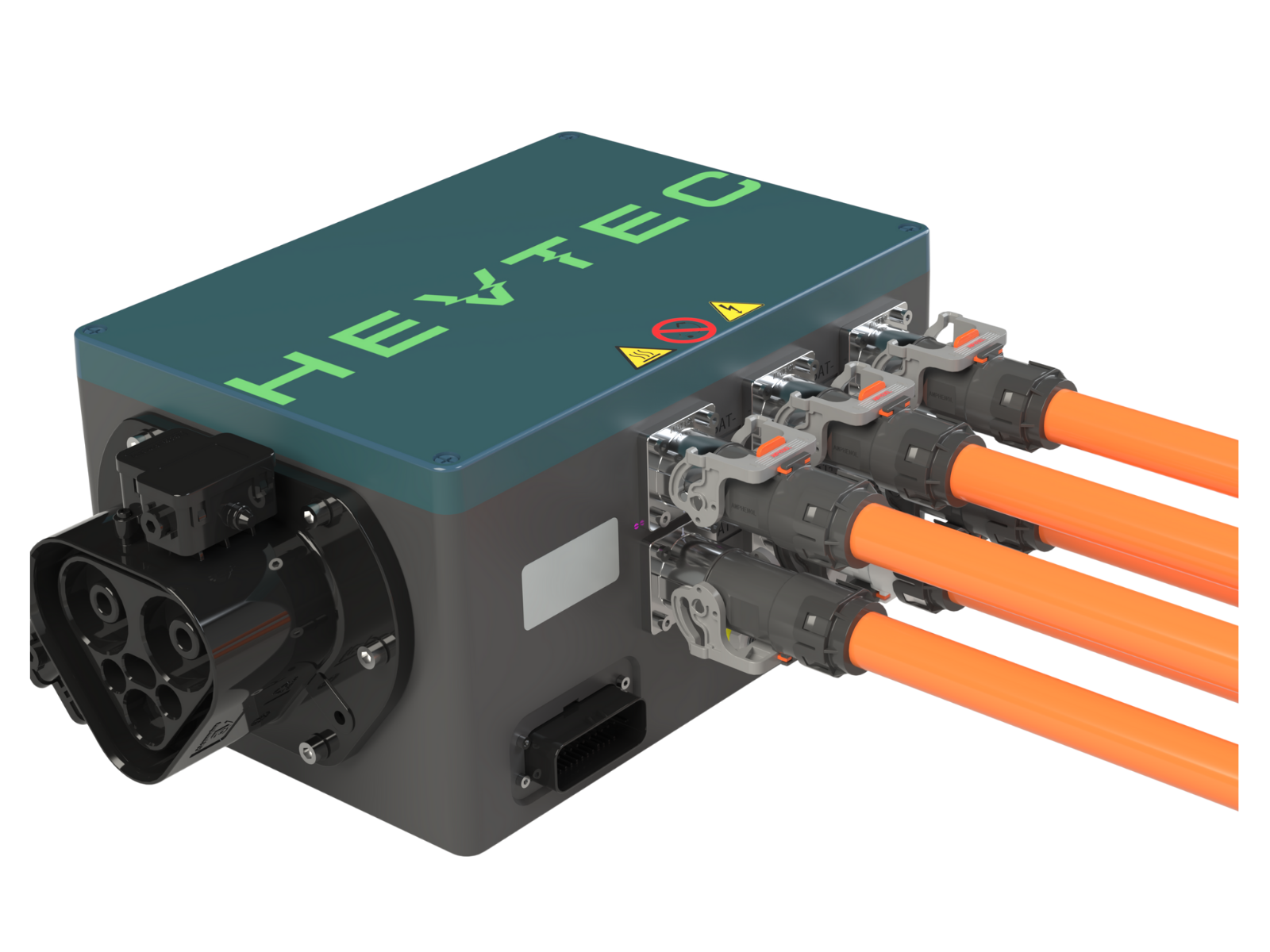
On-board MCSKOSKI MCS1500 kWEnables megawatt-class charging integration for high-utilization heavy equipment.In June, we launched the PURO on-board CCS charging interface, now in its pre-serial phase, and showcased it at iVT Expo in Köln. Shortly after, the most meaningful milestone followed: the first deliveries were installed in customer machines.
The first customer installations marked a shift from a product launch to repeatable CCS integration. A defined interface and installation path allow engineering teams to spend less time rebuilding the same details and more time validating the machine. This also supports a smoother commissioning flow and, typically, a more serviceable end result in the field.
At iVT Expo, we also introduced the KOSKI on-board MCS charging interface prototype.
MCS integration affects the machine architecture early, including physical layout, protection, thermal management and safety logic. The pilot is intended to validate these decisions in real duty cycles and operating environments before the solution is scaled further.
In November 2025, Hevtec introduced e-Kit as a productized offering at Teknologia Expo in Helsinki.
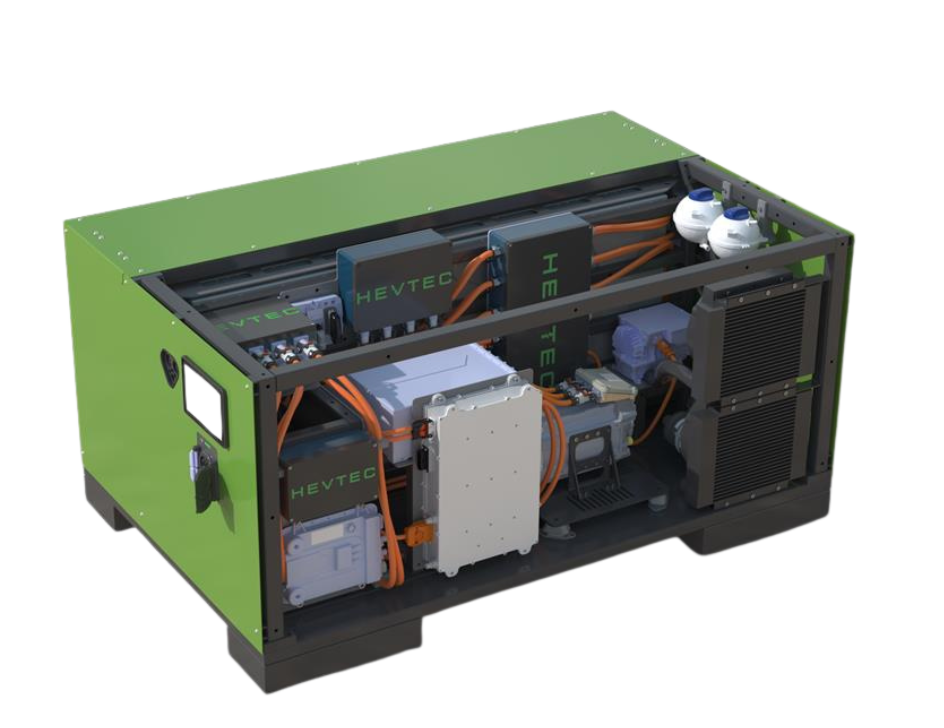
The e-Kit is the productized result of Hevtec’s accumulated electrification and system integration experience. It brings preconfigured system elements, validated component combinations and integration-ready software into a clearer and more repeatable offering.
It is not one predefined hardware package. Each e-Kit is configured around the machine’s duty cycle, operating conditions, available space, charging strategy and performance targets.
What the e-Kit includes

A modular architecture does not mean one universal configuration. Components with similar headline ratings can produce very different results in efficiency, runtime, cooling, service access and charging performance. Each system must therefore be configured around the machine and its real operating requirements.
This application-specific approach also supports scalable product development. The Geoelectric MTG-e demonstrates how e-Kit and CCS charging work together as one complete electric powertrain. The Junttan PMx2e and PMx4e show how a proven architecture can be scaled to larger machine variants without redesigning the core system.
Curious if the e-Kit fits your machine? Explore how the kit scales through architecture and supports both CCS and MCS charging integration.
What the e-Kit includes

In November 2025, we finalized the specifications for the RUNKO PDU product series in sizes S, M and L.
High-voltage distribution can become a hidden source of complexity when protection, connections and service access are spread around the machine. RUNKO centralizes these functions into one unit, creating a cleaner architecture and supporting faster fault finding, safer service work and more predictable commissioning.
The scalable product series allows the PDU to be configured according to system voltage, current requirements, charging method and the required number of high-voltage outputs.
Planning an electric or hybrid machine? Speak with an expert about the next practical step for your machine.
You are currently viewing a placeholder content from Vimeo. To access the actual content, click the button below. Please note that doing so will share data with third-party providers.
More InformationYou are currently viewing a placeholder content from YouTube. To access the actual content, click the button below. Please note that doing so will share data with third-party providers.
More InformationYou need to load content from reCAPTCHA to submit the form. Please note that doing so will share data with third-party providers.
More Information