System integration for a hydrogen and battery-electric heavy-duty truck

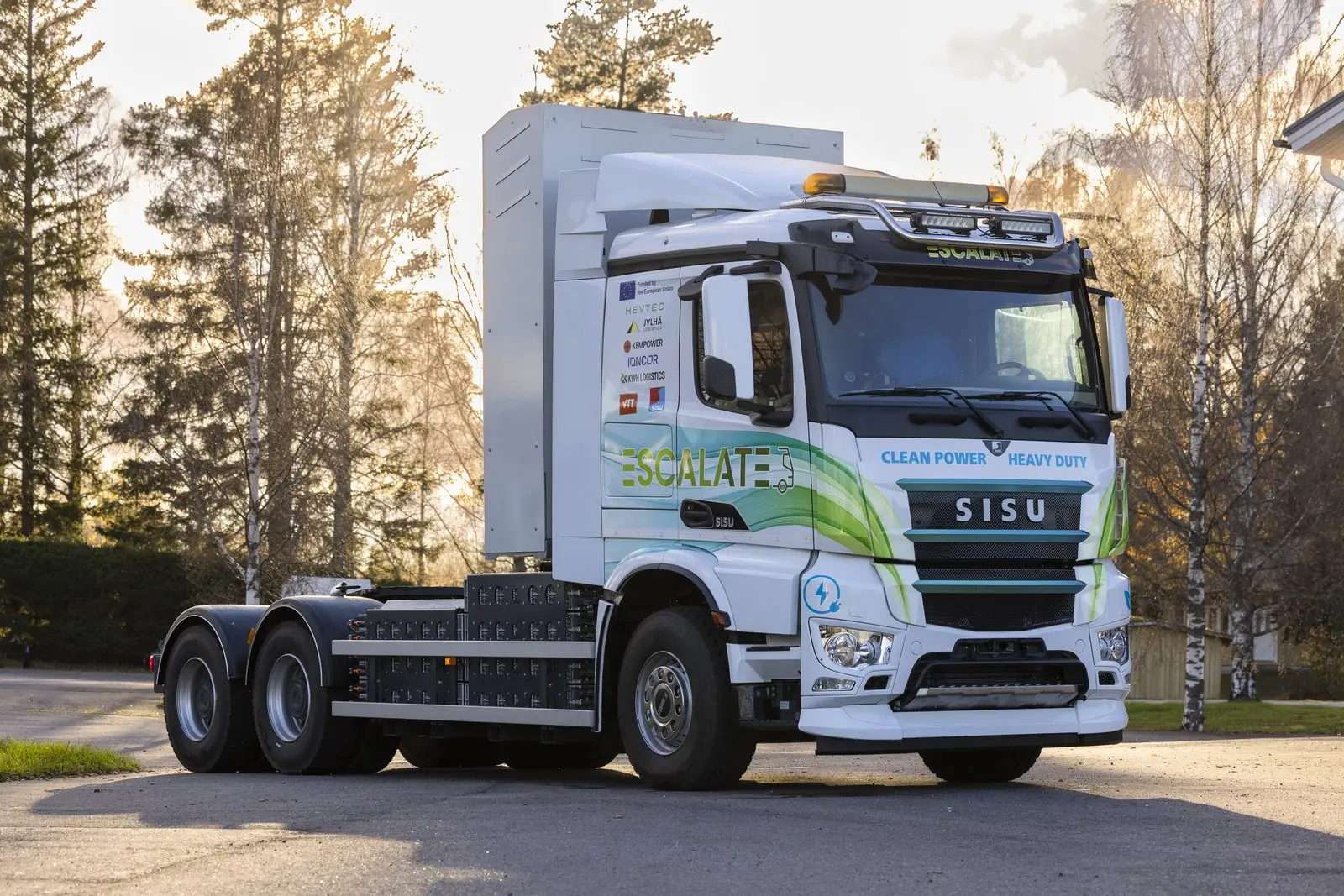
The SISU Escalate truck is already moving under its own power, ahead of its long-haul pilot in Finnish winter conditions. The battery and fuel cell hybrid is the heaviest and longest of four trucks piloted in the EU-funded ESCALATE project.

Working closely with Sisu Auto, Hevtec integrates the electric powertrain and implements the vehicle-side charging system. From electrical design and software development to component installation, commissioning, and testing, our experts manage the entire integration process.

SISU Escalate battery and fuel cell hybrid truck, front three-quarter view

From requirements to a powertrain that drives

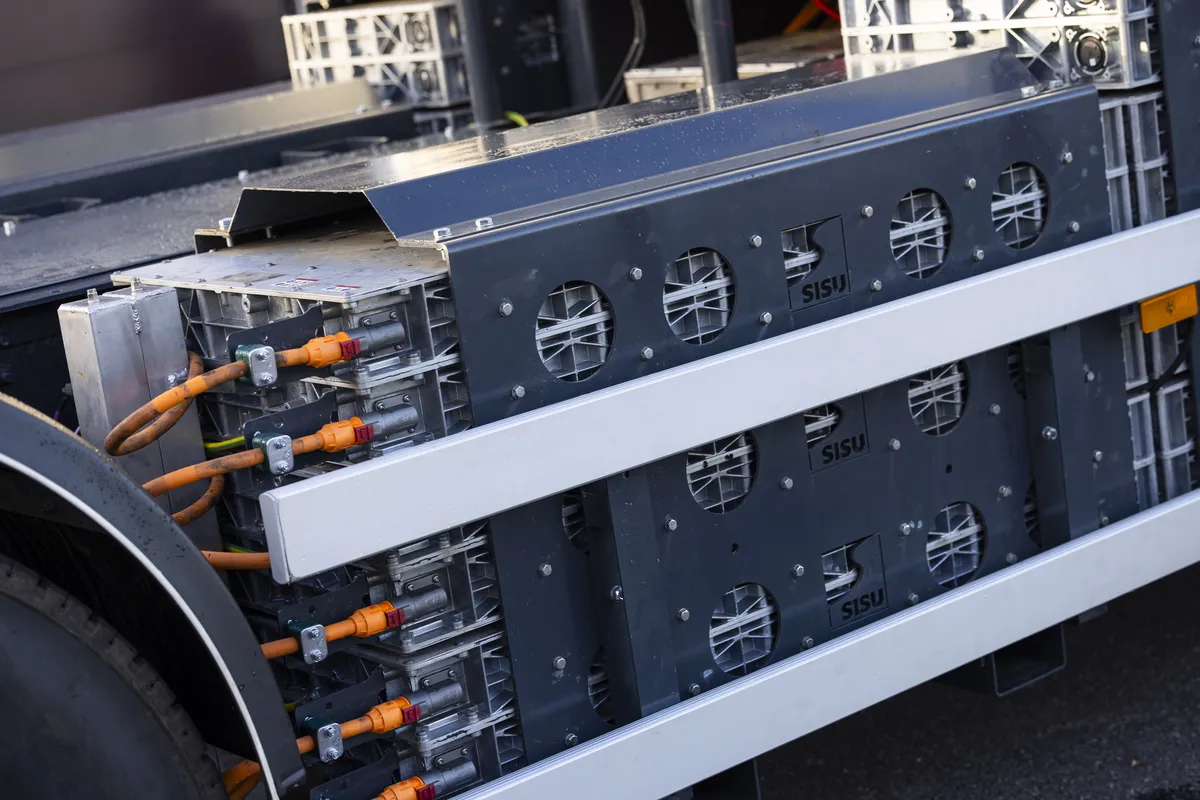
The vehicle’s structure, available installation space and operational requirements formed the basis for the design process. Hevtec developed the control software for both the electric powertrain and gearbox. Electrical engineering and wiring architecture were carried out utilizing 3D modelling to ensure seamless integration within the vehicle.

High-voltage battery modules and orange cabling on the SISU Escalate truck chassis
High-voltage components and cabling on the truck chassis.
High-voltage battery modules and orange cabling on the SISU Escalate truck chassis
High-voltage components and cabling on the truck chassis.

Finnish expertise, one vehicle

The Finnish pilot is led by VTT. Sisu Auto manufactures the vehicle, the battery system comes from IONCOR and Kempower supplies the MCS charging infrastructure. Jylhä Logistics will operate the truck.

Finland and Sweden run longer and heavier truck combinations than the rest of Europe. Together with Finnish winter, that makes this the most demanding operating environment of the four pilot trucks, as described in VTT’s press release.

Each partner knows its own system best. Hevtec’s work starts where those systems meet.

What system integration looks like in this project

Our role is to coordinate the requirements of each party and ensure that every subsystem works seamlessly with the others. We define installation locations, cooling concepts, wiring architecture and communication interfaces, then integrate them into one vehicle-wide electrical and control platform.

The end result is a truck where the battery, charging infrastructure, fuel cell and drivetrain operate as a fully integrated solution.

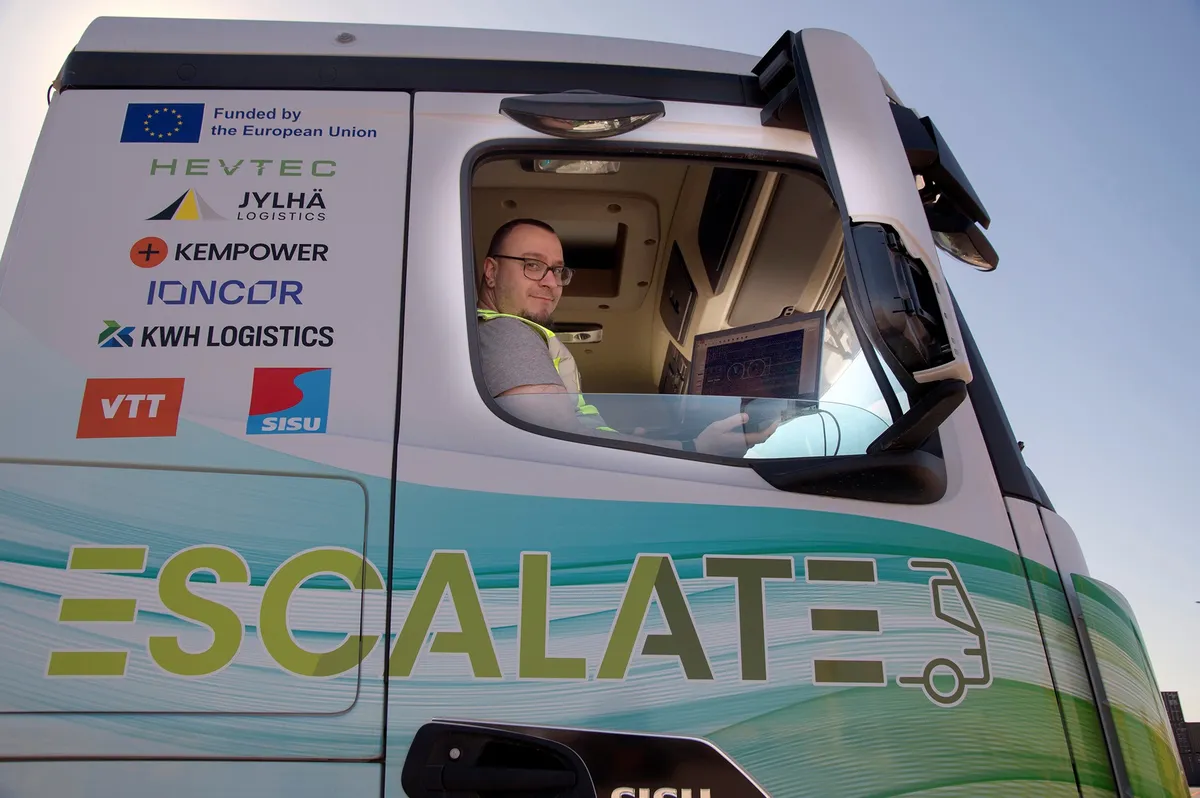
Ioannis Soultanis with a laptop in the cab of the SISU Escalate truck, testing and adjusting the electric powertrain
Ioannis Soultanis testing and adjusting the electric powertrain.
Ioannis Soultanis with a laptop in the cab of the SISU Escalate truck, testing and adjusting the electric powertrain
Ioannis Soultanis testing and adjusting the electric powertrain.

“The vehicle manufacturer knows the vehicle and how it is used. We bring expertise in the electric powertrain and its subsystems. Bringing those skills together is what makes the components work as one complete vehicle.”

Heikki Hakala, CTO, Hevtec

CCS for everyday charging, MCS for long-haul stops

The truck charges through the Hevtec Puro charging interface for CCS (Combined Charging System), already in use since the first test stage.

The long-haul segment of the project requires significantly higher charging power than CCS can provide. To meet these demands, the truck is equipped with Megawatt Charging System (MCS) capability. On the vehicle side, charging is enabled through the Hevtec Koski charging interface, paired with the Hevtec Runko power distribution unit (PDU) designed for megawatt-level power transfer.

From the design desk to the driver’s seat

The project scope has covered prototype integration, vehicle commissioning and end-user support. During the Kokkola testing phase, our team provided hands-on driver training and technical assistance whenever needed.

The training covered the vehicle systems, where the key components are and what differs from conventional diesel trucks. Many of our engineers have driven trucks for a living, which brings real-world insight to the training.

The SISU Escalate truck on the move. Video: VTT.

Battery and hydrogen working as one

The vehicle integrates a 650 kWh battery with a fuel cell system rated at up to 120 kW. The fuel cell acts as a constant power energy source for demanding transport missions, and its usage is coordinated with the battery through Hevtec’s energy management and control software.

Fuel cell commissioning, including first refuelling and system validation, forms the next stage of the project. During operation, vehicle performance is analysed using operational data and a digital twin environment. While VTT’s models optimize hydrogen usage strategies, Hevtec’s software executes the real-time control decisions that govern the vehicle’s energy flow.

SISU Escalate truck

Battery
650 kWh
Fuel cell
up to 120 kW
Daily distance
540 km
Route
Vuosaari harbour to Jyväskylä
Gross combination weight
limited to 68 t
Charging
CCS and MCS, vehicle-side
Source: VTT press release, 21 October 2026.

SISU Escalate truck

Battery
650 kWh
Fuel cell
up to 120 kW
Daily distance
540 km
Route
Vuosaari harbour to Jyväskylä
Gross combination weight
limited to 68 t
Charging
CCS and MCS, vehicle-side
Source: VTT press release, 21 October 2026.

What comes next

Rauanheimo tested the battery-electric version at the port of Kokkola in spring 2026. Since then, the truck has been prepared for its next stage. The first tests ran on high-power battery packs with limited capacity. Now it is being upgraded with more energy on board, the fuel cell and hydrogen tanks, and megawatt charging through Koski and Runko.

This week, the truck is on show in Brussels at European Hydrogen Week, 26 to 30 October 2026.

After Brussels, the integration work continues. Normal transport operation starts in late 2026: 540 kilometres a day between Vuosaari harbour and Jyväskylä, with a gross combination weight limited to 68 tonnes. Six months of monitoring will show how the truck performs, Finnish winter included.

About the ESCALATE project

Hevtec is part of the ESCALATE project, a Horizon Europe initiative funded by the European Union. The project brings together 37 partners from 13 countries to develop and test next-generation zero-emission powertrain solutions for heavy-duty transport. The following Finnish partners are involved in the pilot’s development: VTT, Sisu Auto, IONCOR, Kempower, Hevtec, O. Jylhä, Rauanheimo.