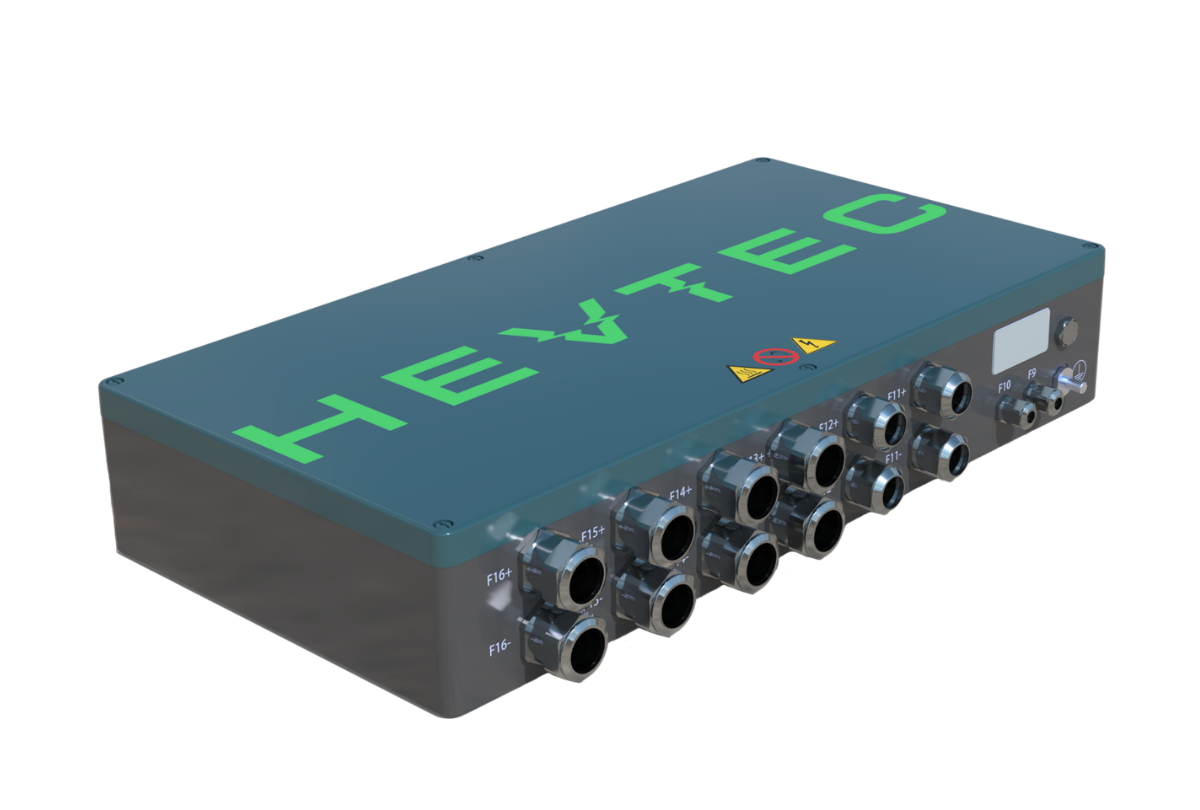
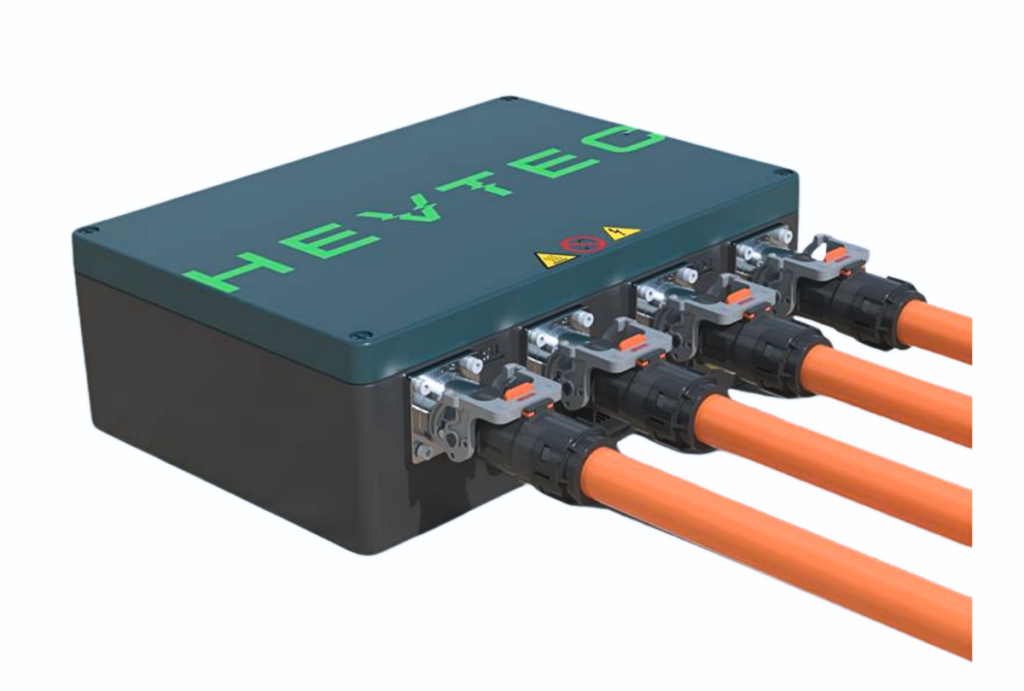
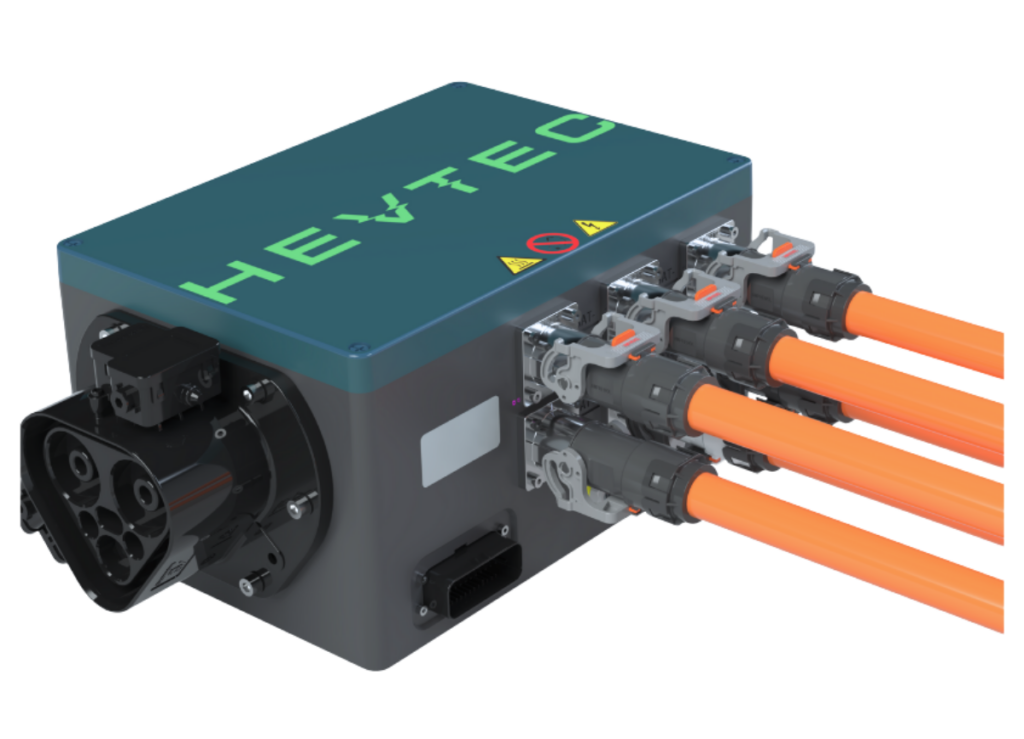
Modular Electrification Kit for Heavy Machinery
50% pre-configured from 70+ projects. 80% of the software is ready to integrate. What remains is built around your machine’s actual requirements.
What makes e-Kit different
Most electrification kit solutions found on the market lack true modularity. This means that the result is a system that compromises on motor sizing, battery chemistry, or control architecture to fit a predefined package.
Hevtec e-Kit starts from your machine’s actual duty cycle and operating conditions. Motor winding, battery chemistry, and system architecture are selected to match the application — not the other way around. The wrong motor winding alone can cost more than 10% in efficiency. The right selection can reach 96%.
Modular
50% of the kit is ready before your project starts. Field-proven component combinations built from 70+ real electrification projects.
Field-Proven
20+ applications. 70+ completed projects. Every component combination has been validated in real operating conditions.
Scalable
Motors 20–400 kW. Batteries 30–1000 kWh. Configured to your machine’s duty cycle — expands according to your needs
How our e-Kit works
- Half the kit is pre-configured before your project starts. The rest is defined by your machine — duty cycle, application, and operating conditions.
- Components are selected for your specific application – every component is validated in Hevtec’s own development environment before being recommended.
- 80% of the control software is field-proven and ready to integrate. That removes one of the most time-consuming parts of electric powertrain development from your critical path.
- Ensure reliable performance – power up with a stable and optimized energy flow
- Flexible integration – modular design allows components to fit heavy machines of any size
The complete electrification kit — what it covers
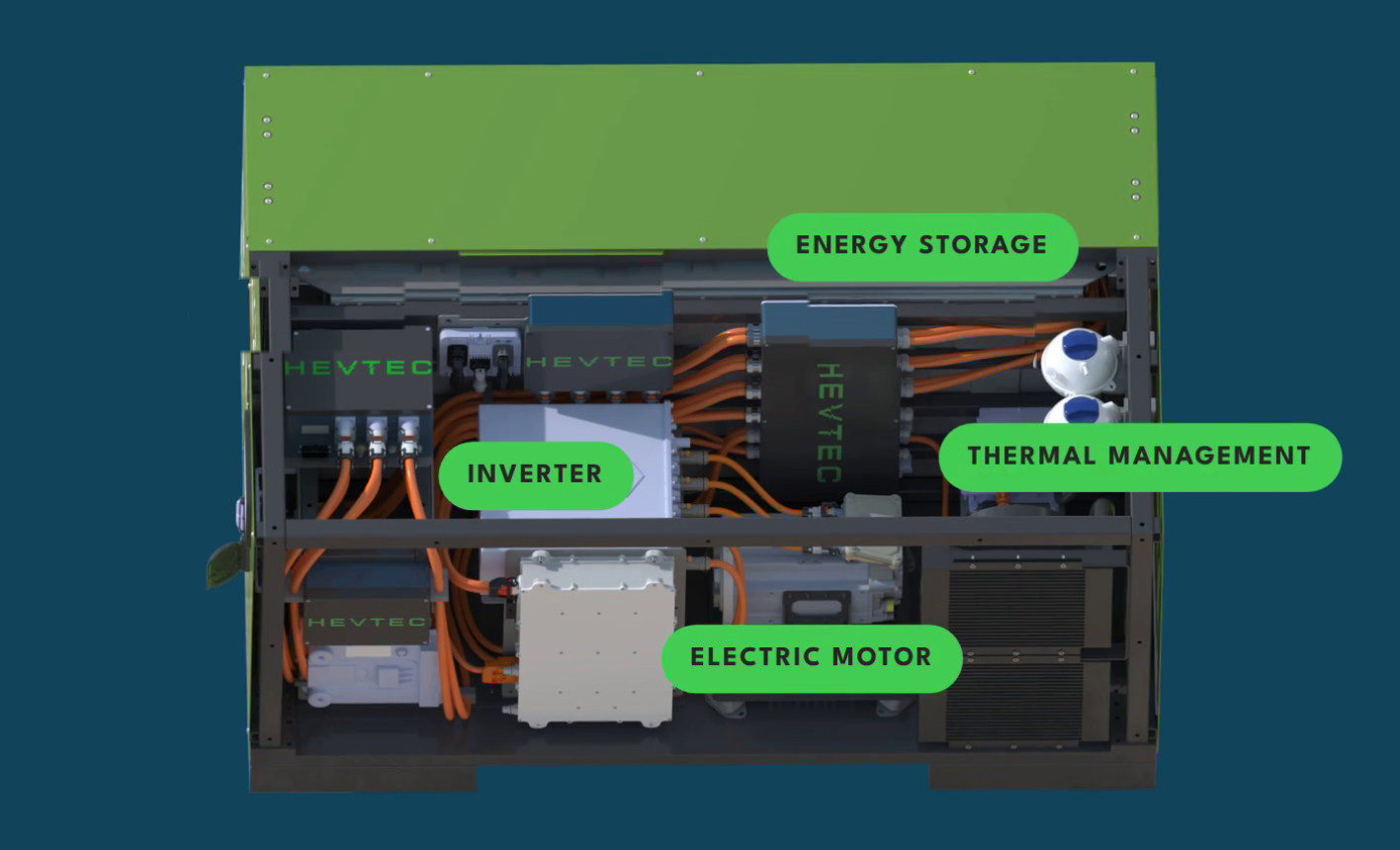
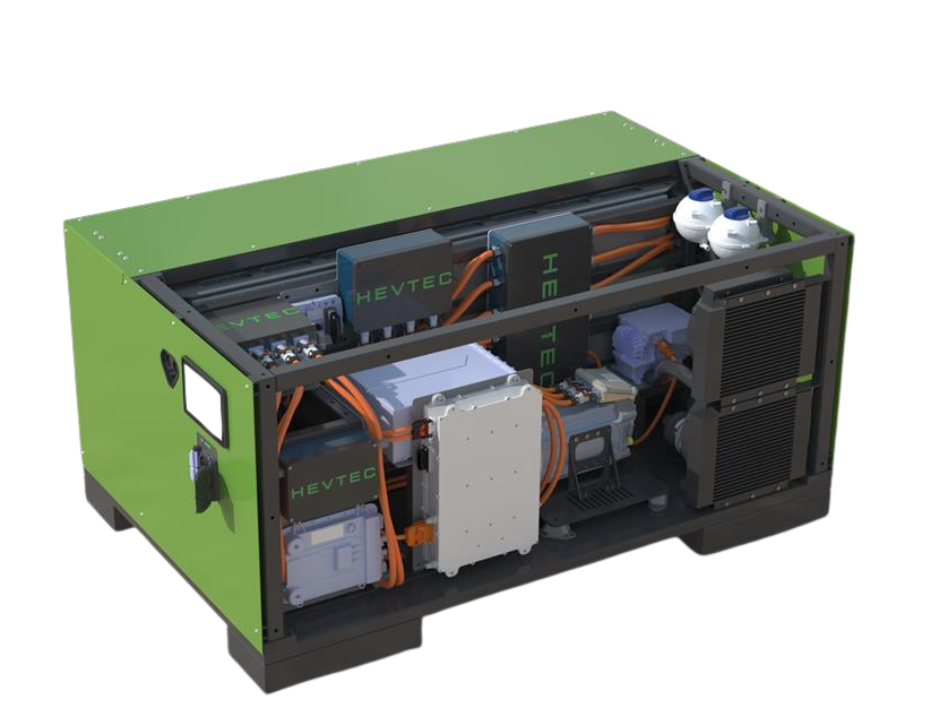
e-Kit system specifications: motors 20–400 kW, batteries 30–1000 kWh
Motors and inverters/converters, 20-400kW, 500-850Vdc
Batteries, 30-1000kWh, 500-850Vdc
Cooling system optimized to the system
Controllers, I/O and displays optimized to the system
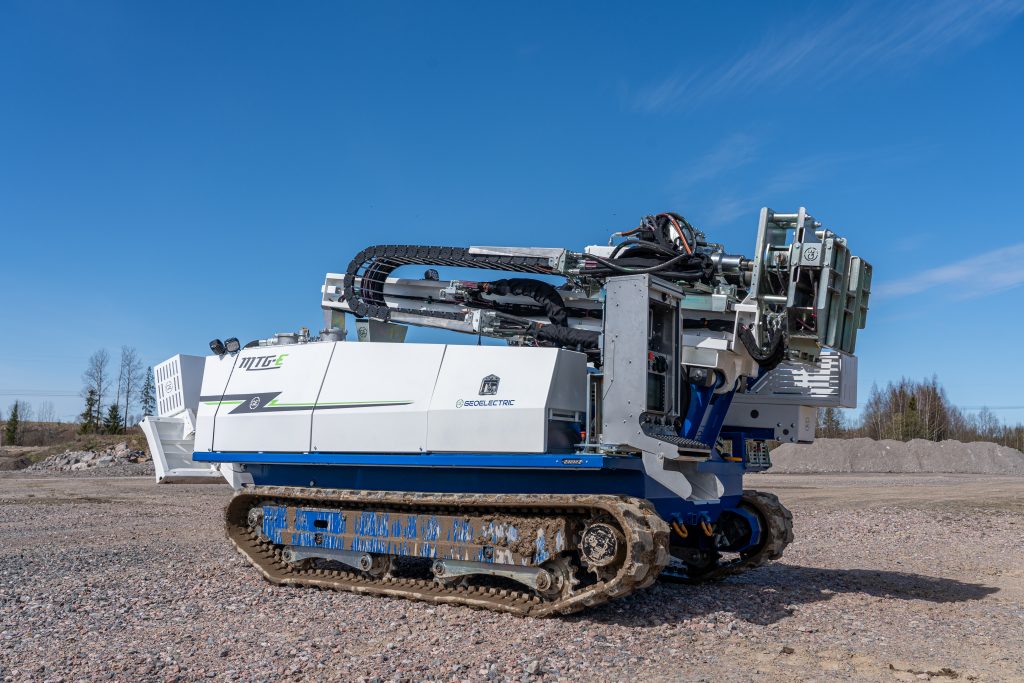
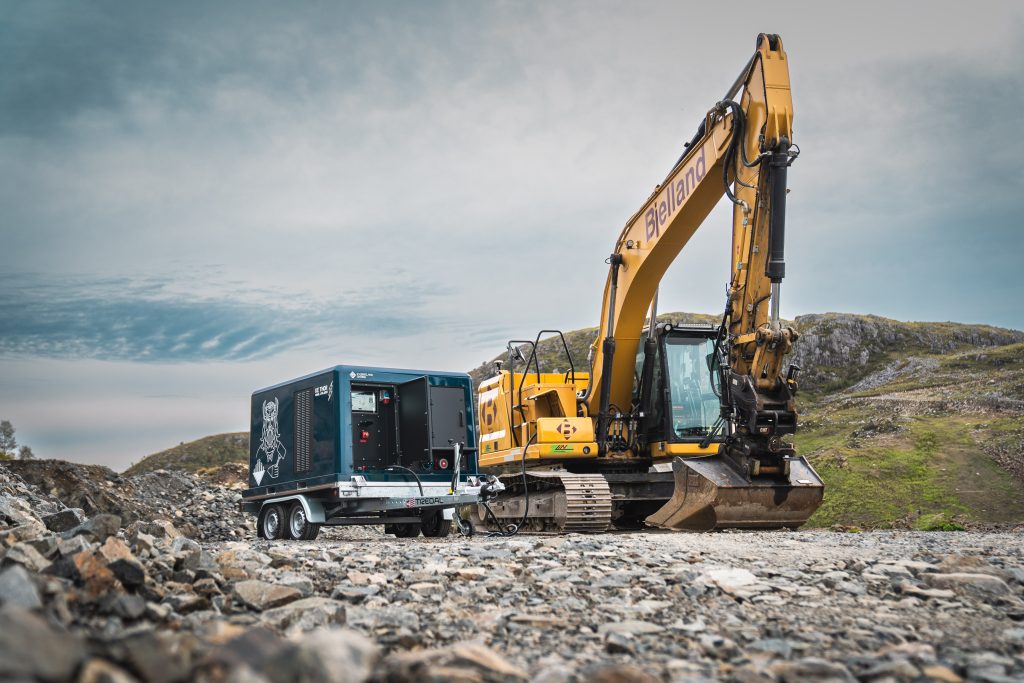
Real cases, scalable solutions
What reduces risk in a machine electrification project?
Established supplier relationships and field-tested configurations. Hevtec works with verified component suppliers because supply chain stability directly affects project timelines. Configurations tested across 70+ projects mean the integration decisions your team is about to make have already been made — and learned from — across our project history.
80% of Hevtec’s field-proven control software is ready to integrate into your machine. That alone can cut months from your development timeline.
Not sure if e-Kit is the right fit? We run a short pre-study based on your machine type and duty cycle and give you a clear answer. Start with a pre-study.
e-Kit Supports MCS and CCS charging
The Electrification Kit – Dos and Don’ts
Prelude – The Illusion of a Universal Fit
An electrification kit is generally a system made from a list of pre-selected components that cover as wide of an operation area as possible, so that it would fit many different size machines and use-cases. This inherently means that the kit doesn’t fit any machine perfectly. Also, the electrification kits are typically packaged in fixed size containers with the justification that “it is easy to install”. The reality is that machines differ from type and brand to another. A solution that fits one rarely fits the other; the usable space is typically distributed all around the machine, which means installing large pre-configured containers in a machine could prove difficult. The aesthetics of a container solution hardly pleases the eye either.
Why selecting the right components matters
In electric and hybrid powertrains, poor component choices can lead to compromised performance.
The electric motors might be similarly over- or undersized, making the powertrain inefficient. For example, matching the electric motor nominal operation point incorrectly could decrease the powertrain efficiency over 10%, while selecting the exactly correct winding for speed and torque leads to efficiencies up to 96%.
The energy storage needs to be chosen according to the customer application and ambient where the machine is used. If the energy storage is a lithium-ion battery, the battery chemistry must be selected according to the use-case – there is no “one size fits all” solution and the available space for the energy storage is hardly ever identical between two applications.
Customized Solutions Deliver Quality Results
One thing we keep in mind when designing an electrification kit for our customer is also be made keeping in mind the customers’ needs throughout their full product catalogue in order to minimize the amount of component vendors. When it comes to battery solutions, selecting the correct cell chemistry and thermal management strategy is key.
As an example, we have seen kits where the inverter and motor have been selected to handle over 250 kW constant power, but the same setup is also used for machines that require only 80 kW constant power, which compromises the electric powertrain efficiency.
It’s imperative to realize that one solution does not fit all when it comes to lithium-ion battery systems. The machine ambience, machine duty cycle and charging strategy should guide the selection. When an electric powertrain kit provider carries only one battery solution and chemistry in their catalogue, the customer is in danger to be forced making a compromise is system specification. In worst case, selecting the wrong battery system and or chemistry will limit the machine operation.
Experience has proven that the quality of battery solutions varies greatly even though on paper the systems would seem nearly identical. In battery electric and hybrid powertrains, the battery system is commonly the most expensive component and selecting the wrong one could prove to be very costly. Here are the key checks we recommend →
Don’t let component choices compromise performance.
Validate the fit early. Share your duty cycle, ambient conditions, and charging targets — we’ll sanity-check key components and outline a scalable architecture before you commit.